
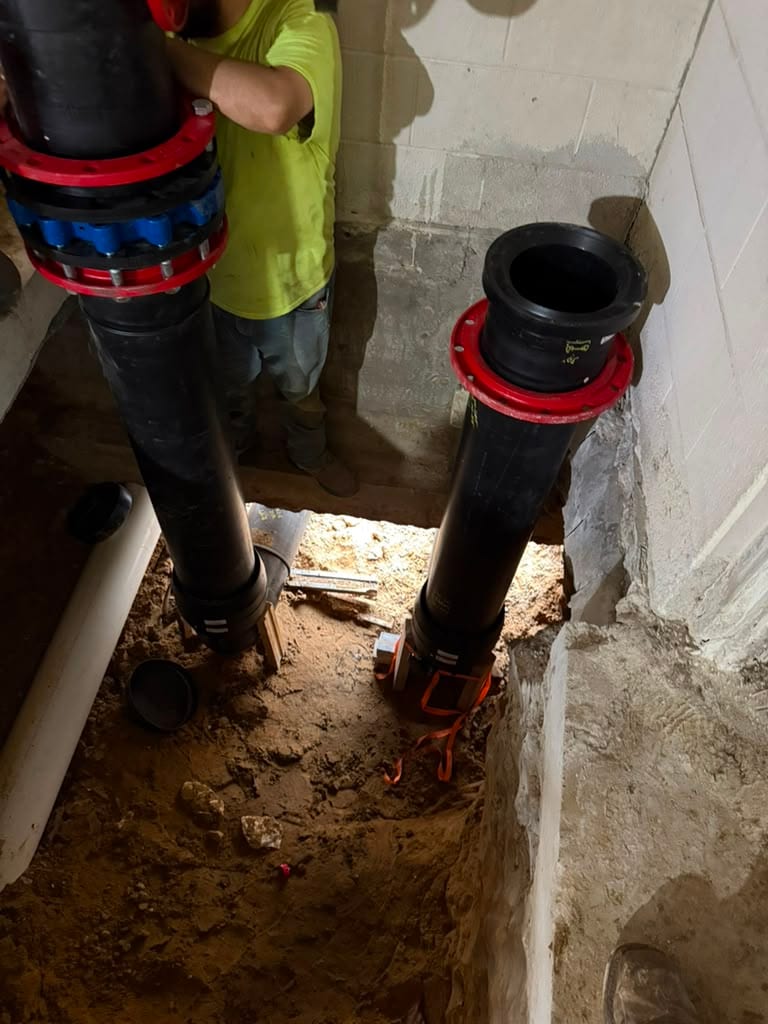
Couplings with built-in heating elements that fuse permanently to the pipe — the answer for repairs, tie-ins and places a fusion machine can't go.
Electrofusion uses specially designed couplings or fittings containing built-in heating elements. Once connected to an electrofusion processor, the fitting heats and permanently fuses to the pipe. This method is ideal for repairs, tie-ins, confined spaces, and locations where traditional butt fusion equipment cannot be used.
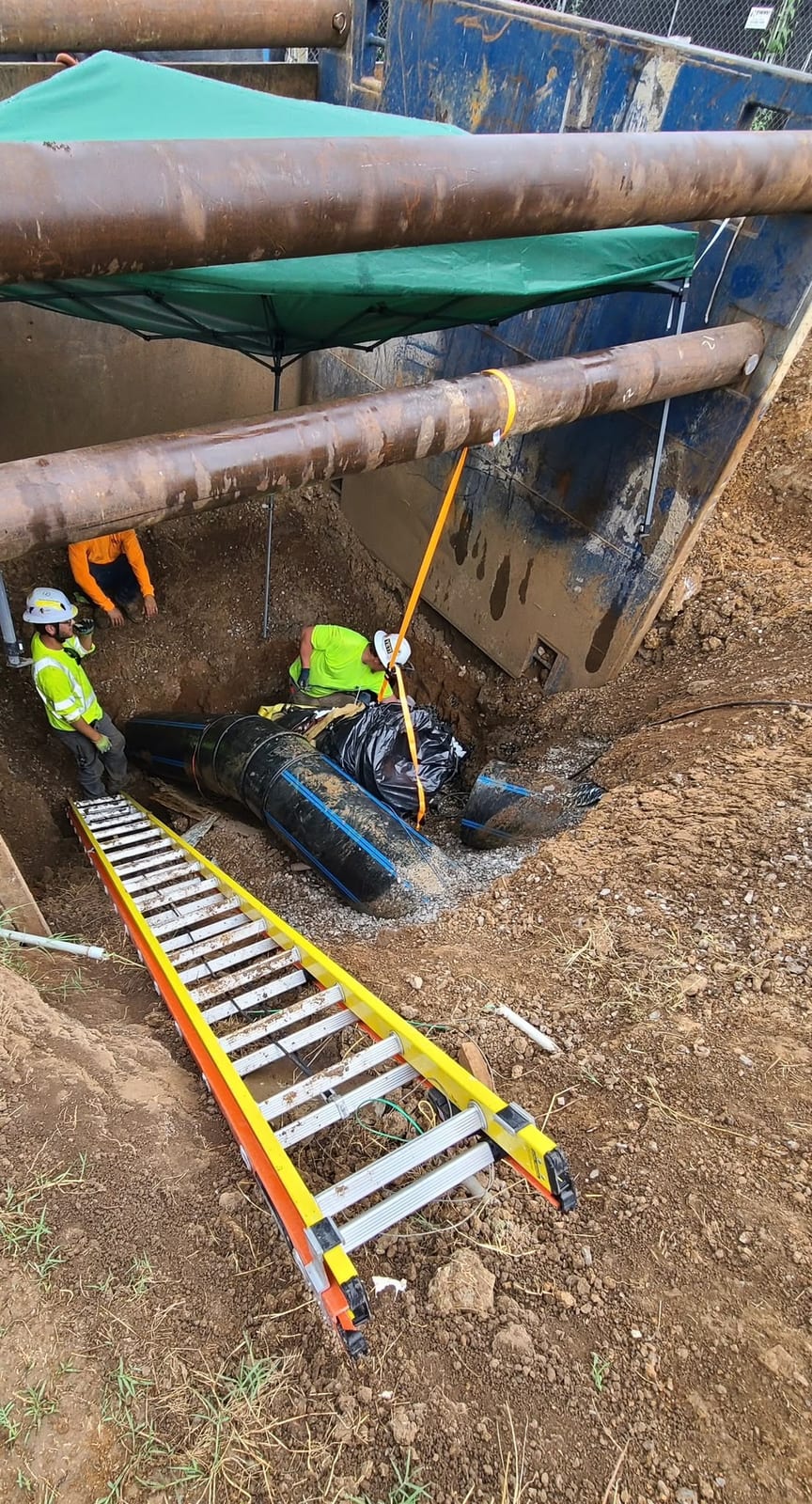
Butt fusion needs both pipe ends free, aligned and clamped into a machine. Real job sites don't always allow that. A main break under a road, a tie-in at the bottom of a vault, a connection between two fixed runs that can't be pulled apart, a repair in a trench box with two feet of working room — that's electrofusion territory. The coupling does the work, so the pipe doesn't have to move.
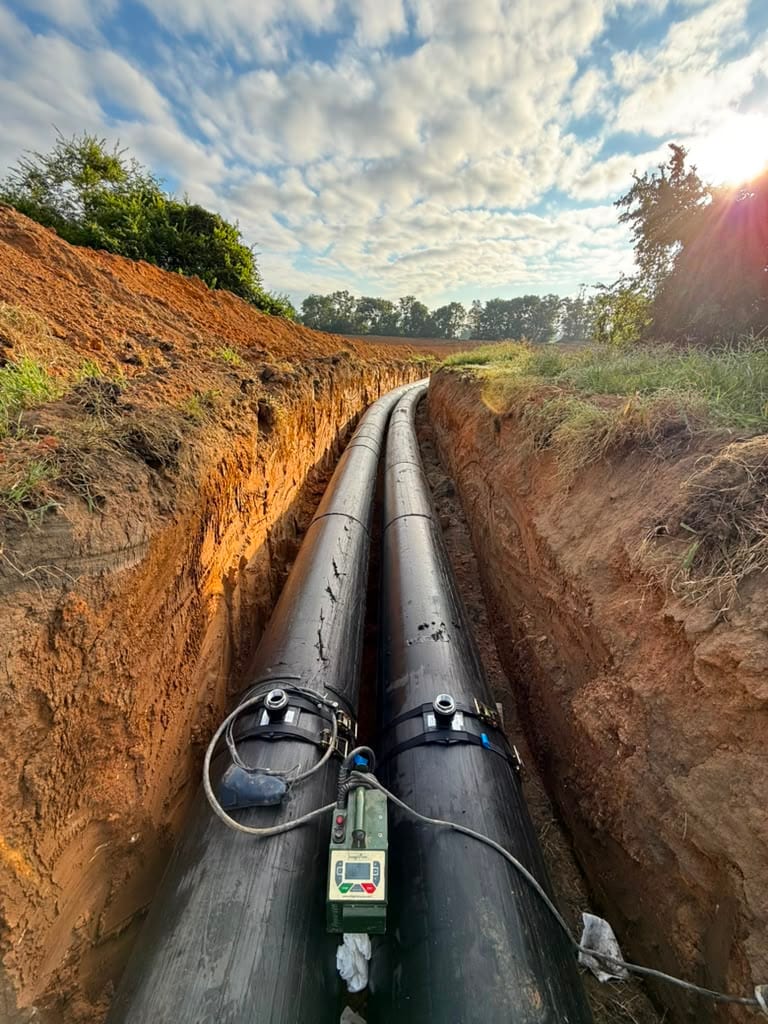
Because the processor controls the fusion cycle electronically, the parameters aren't a judgment call. What is on the installer is the preparation — scraping and cleanliness are where electrofusion joints are won or lost, and we treat them that way.
Most electrofusion work sits at the bottom of a hole somebody had to dig. Because we run excavation and fusion out of the same shop, we can open the road or the yard, shore it, make the connection and put it back — instead of coordinating two contractors around one hole. See utility trenching for the excavation side, or HDPE inspection if your project needs the joint documented.
Electrofusion uses specially designed couplings or fittings containing built-in heating elements. Once connected to an electrofusion processor, the fitting heats and permanently fuses to the pipe. This method is ideal for repairs, tie-ins, confined spaces, and locations where traditional butt fusion equipment cannot be used.
Electrofusion is used when the pipe cannot be clamped into a butt fusion machine. That includes repairs on existing pipelines, tie-ins to systems already in the ground, work inside vaults, pits and trench boxes, and connections between two fixed runs that cannot be pulled apart or aligned in a machine.
HDPE develops an oxidized surface layer that will not bond properly. Mechanically scraping that layer off the full fusion zone exposes clean material for the fitting to fuse to. Scraping and keeping the surfaces free of dirt, oil and moisture are the most important steps in making a sound electrofusion joint.
Yes. Electrofusion is one of the most common ways to repair HDPE. A damaged section can be cut out and replaced using electrofusion couplings, which fuse permanently to the existing pipe without needing to move or realign the pipeline.
Electrofusion couplings can join pipe of the same outside diameter across a range of wall thicknesses, which is one reason they are used at transitions where butt fusion is not possible. The specific fitting must be matched to the pipe, so send us the pipe size and DR on both sides of the connection.
A portable electrofusion processor supplies the fitting with a controlled voltage for a set time, usually reading the fusion parameters directly from a barcode on the fitting. The processor is run from a generator or site power, so the method works in remote locations as well as developed sites.
What's failing or tying in, pipe size, and access.
Excavate, shore and dewater so the joint has room.
Prep the surface, restrain the fitting, run the cycle.
Full cool-down, pressure test, then put it back together.
Tell us what you're up against — we'll tell you what it takes to fix it.