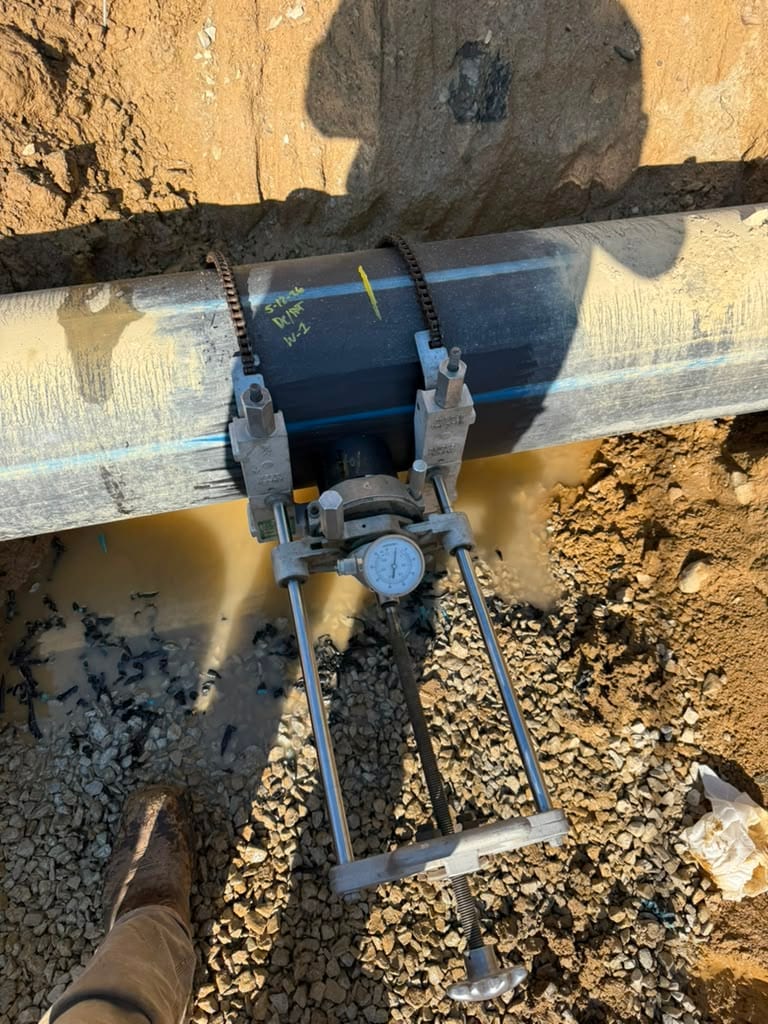
Verification that fusion work was performed in accordance with project specifications and industry standards — before it gets buried.
HDPE fusion inspection verifies that fusion procedures were performed in accordance with project specifications and industry standards. Our inspection services include visual examination of fusion joints, verification of proper procedures, documentation review, and quality assurance to help ensure long-term pipeline performance and project compliance.
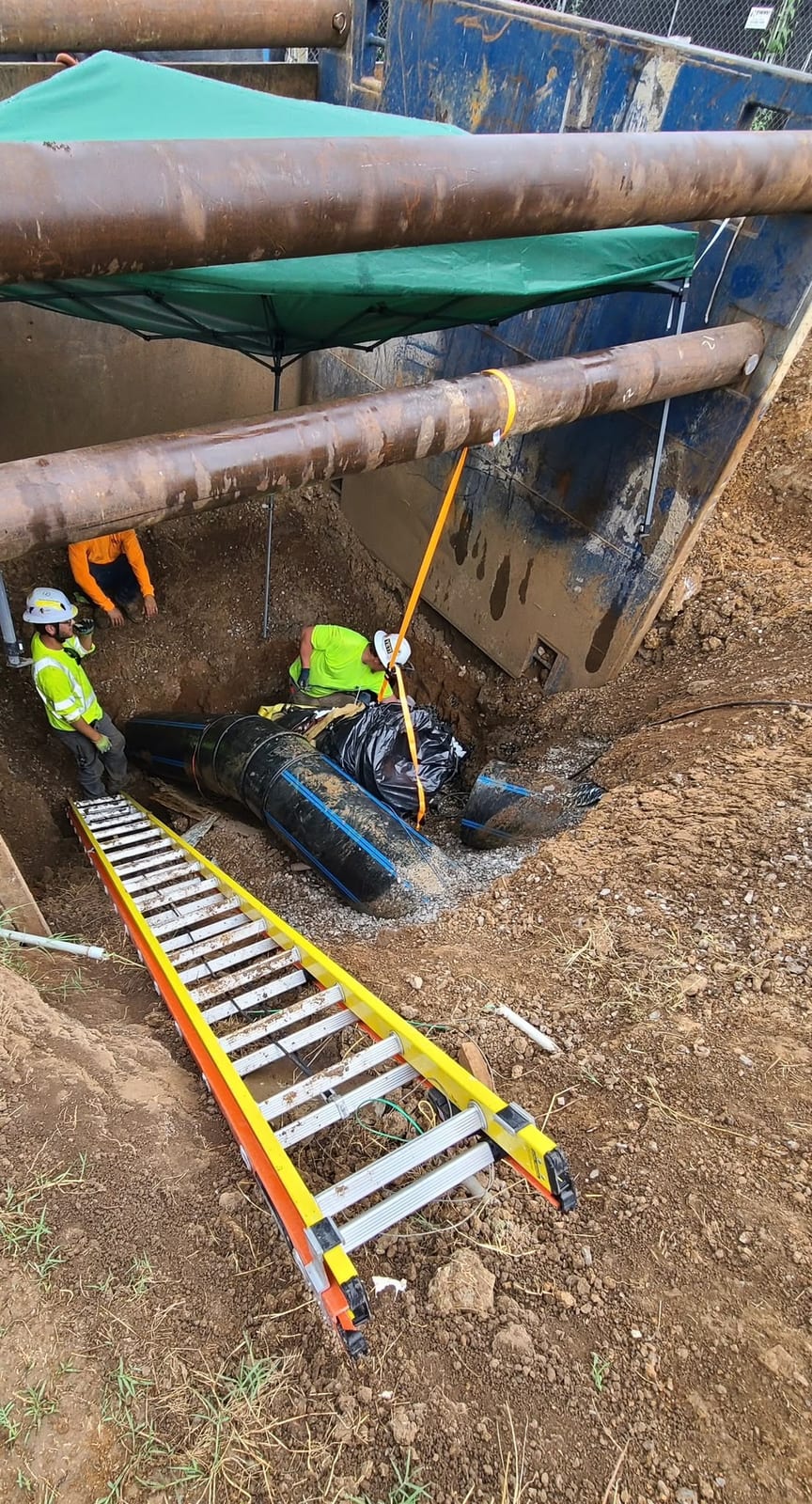
A fusion joint is inexpensive to inspect and expensive to dig up. Once a run is laid, pulled or backfilled, a bad joint stops being a fusion problem and becomes an excavation problem, a schedule problem and a liability problem. Inspection puts a second set of qualified eyes on the work while it's still accessible — which is the whole point.
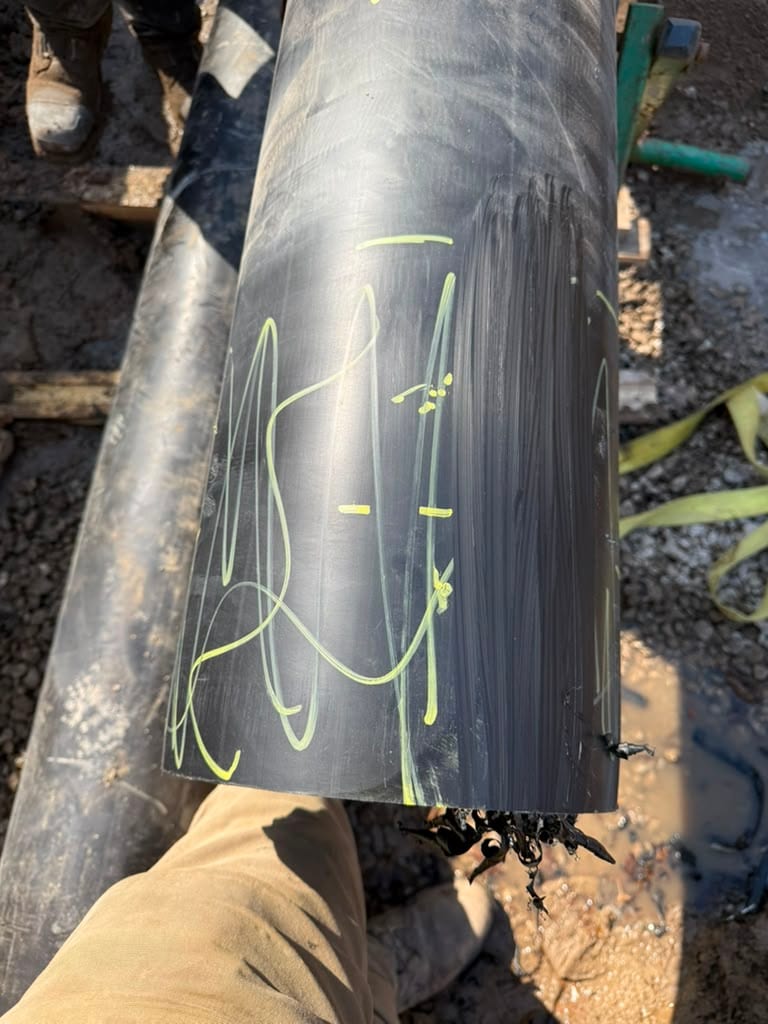
Where a joint doesn't meet the standard, we say so, in writing, with the reason. That's the value of the service — not a stamp, but an honest read.
Visual and procedural inspection is the industry's front line, and it catches the overwhelming majority of real-world problems: misalignment, cold joints, contaminated surfaces, wrong pressures, cool-down cut short, and joints made outside the written procedure. It is not a destructive or volumetric test — where a project specifies bend-back testing, joint sectioning or a specialized non-destructive method, that scope is defined by the engineer and priced separately. Tell us what your specification requires and we'll tell you exactly what we can cover.
We both perform and inspect fusion work — which means our inspectors know what a good joint looks like because they've made thousands of them. When independence is required on your project, that's a conversation to have up front: we won't inspect our own crew's work and call it third-party. See our butt fusion, electrofusion and saddle fusion pages for the work itself.
HDPE fusion inspection verifies that fusion procedures are performed in accordance with project specifications and industry standards. Inspection services include visual examination of fusion joints, verification of proper procedures, documentation review, and quality assurance to help ensure long-term pipeline performance and project compliance.
A fusion inspector examines the joint itself — bead size, symmetry, roll-back and alignment or mismatch between the two pipes — and verifies the process behind it, including heater surface temperature, facing, fusion pressures, heat soak time and cool-down time. Fusion records, operator qualification and pipe traceability are reviewed as part of the same scope.
A fusion joint is inexpensive to inspect and expensive to dig up. Once pipe is laid, pulled or backfilled, a defective joint becomes an excavation and schedule problem rather than a fusion problem. Inspection puts qualified eyes on the work while it is still accessible and creates a record that the system was built to specification.
Yes. We document what was inspected and report findings against the project specification, including any joints that do not meet the standard and the reason why. Those records support your quality assurance file and project closeout package.
No. Visual and procedural inspection is non-destructive and catches the large majority of real-world fusion problems, including misalignment, cold joints, contaminated surfaces, incorrect pressures and shortened cool-down. Destructive checks such as bend-back testing or joint sectioning, or specialized non-destructive methods, are separate scopes defined by the project engineer.
Yes. Owners, engineers, general contractors and utilities regularly bring us in to verify fusion work performed by others. Where a project requires genuine third-party independence, we will not inspect fusion our own crews performed, and we make that clear before the work starts.
Project specification, pipe data and inspection requirements.
What gets inspected, how often, and what gets reported.
Joints examined and procedures verified as work is performed.
Findings documented and records turned over for your QA file.
Send us the specification and we'll scope the inspection to match it.