
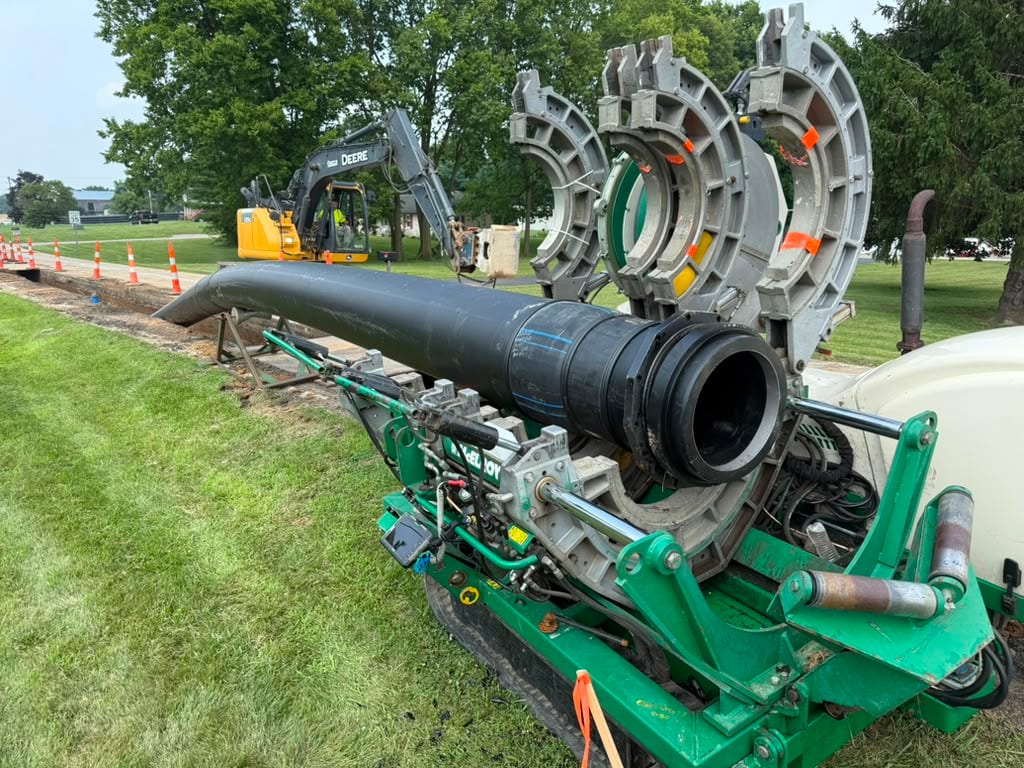
The most common method of joining HDPE pipe — two pipe ends heated and fused under controlled pressure into a single continuous run.
Butt fusion is the most common method of joining HDPE pipe. The ends of two pipes are heated and fused together under controlled pressure, creating a single continuous pipe. A properly completed butt fusion joint is as strong as, or stronger than, the pipe itself, making it ideal for water, gas, sewer, force main and industrial applications.
Butt fusion is the workhorse of any HDPE project. When you have hundreds or thousands of feet of the same size pipe to put in the ground, this is how it gets joined — quickly, repeatably, and with a joint you don't have to think about again. We fuse on the right-of-way, in the ditch line, over a bore pit or in the yard, then string or pull the finished run into place.
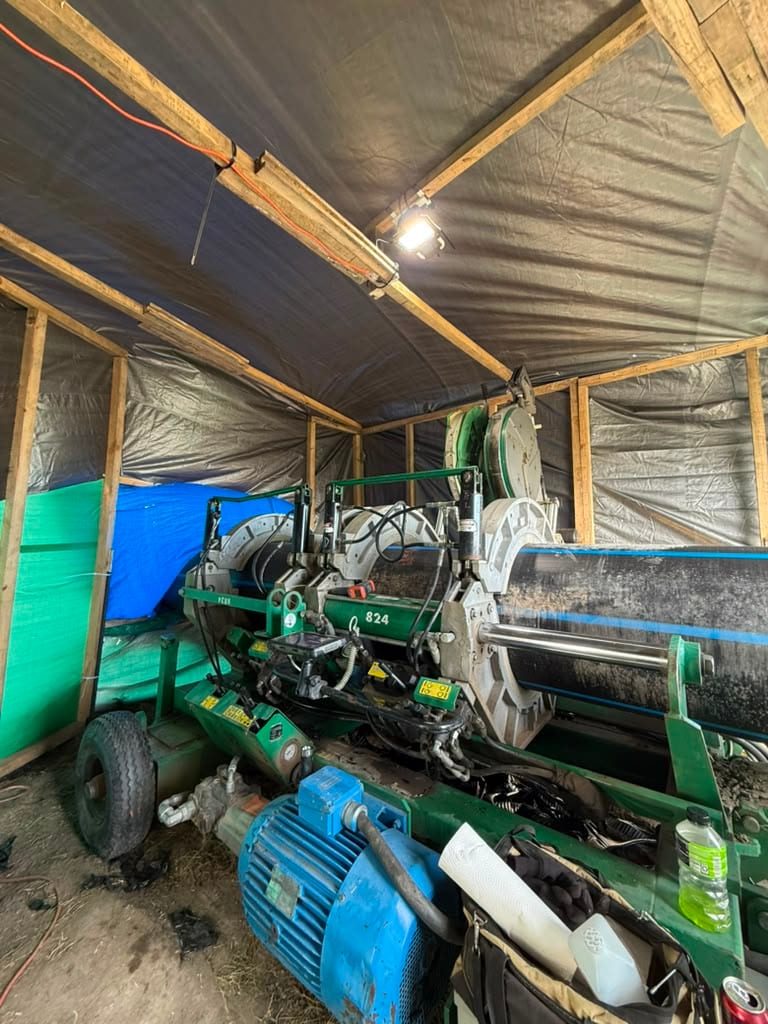
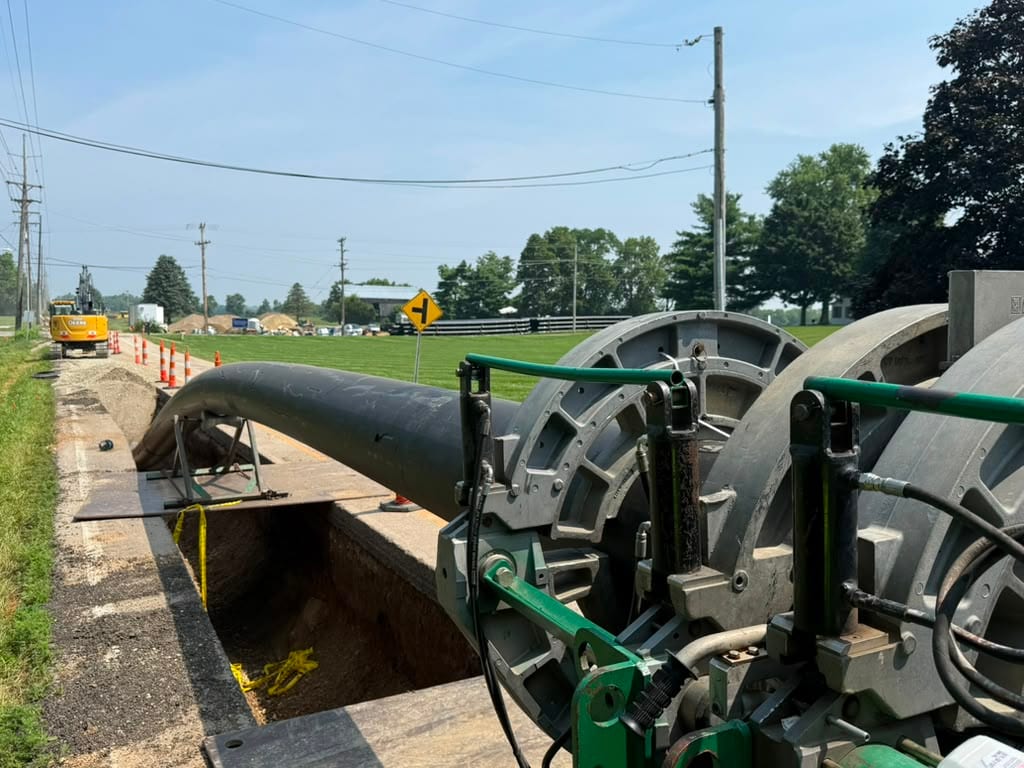
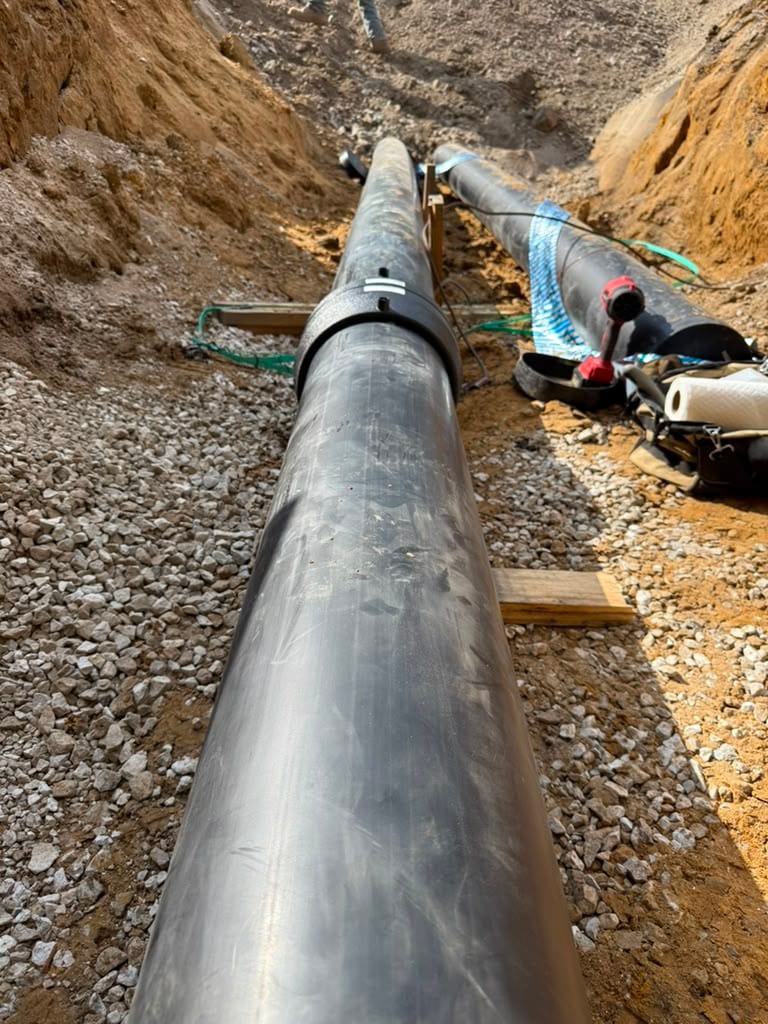
The visible result is the fusion bead — a uniform double roll-back around the full circumference of the pipe. A consistent, symmetrical bead is the first thing an inspector looks at, and it's the first thing we look at too.
Most butt fusion failures trace back to the same handful of causes: dirty or unfaced ends, misalignment between the two pipes, the wrong heater temperature, rushing the heat soak, or releasing the clamps before the joint has fully cooled. We control all five. The heater is checked, the ends are faced and kept clean, alignment is set before heat ever touches the pipe, and the joint stays clamped for the full cool-down — even when that means the crew waits.
Pipe also has to match. Butt fusion requires the same outside diameter and the same wall thickness (DR) on both sides of the joint, and compatible material. If your project mixes DRs or materials at a connection point, that's where electrofusion or a transition fitting comes in — tell us and we'll plan for it.
Butt fusion is the most common method of joining HDPE pipe. The ends of two pipes are heated and fused together under controlled pressure, creating a single continuous pipe. A properly completed butt fusion joint is as strong as, or stronger than, the pipe itself, making it ideal for water, gas, sewer, force main and industrial applications.
A properly made butt fusion joint is as strong as, or stronger than, the pipe body. The fusion bead adds material at the joint, and because the bond is molecular rather than mechanical there is no gasket or coupling to leak. In a correctly fused system the joint is not the weak point.
The bead is the rolled ring of material formed around the outside of the pipe when the two heated ends are pressed together. A uniform, symmetrical double bead all the way around the pipe is one of the first visual indicators that the joint was made correctly, which is why fusion inspection always starts by examining it.
No. Butt fusion requires the same outside diameter and the same wall thickness, or DR, on both sides of the joint, along with compatible material. When a project needs to connect different wall thicknesses or materials, electrofusion couplings or transition fittings are used instead.
It depends on pipe diameter and wall thickness. Small-diameter joints can be completed in a few minutes, while large-diameter heavy-wall pipe requires a longer heat soak and a longer cool-down and can take considerably more time per joint. The cool-down period cannot be rushed without compromising the joint.
Yes, with the right precautions. Wind, rain and cold affect heater plate temperature and cool-down, so joints are shielded from weather and procedures are adjusted for ambient conditions. We routinely work under a shelter or tent when conditions call for it.
Size, DR, material, footage and how it needs to be laid.
Machine sized to the pipe, heater checked, pipe staged.
Face, heat, join and cool — joint after joint, to procedure.
Beads checked, run laid or pulled, ready for test.
Send us the size, DR and footage and we'll get you a bid — fast.