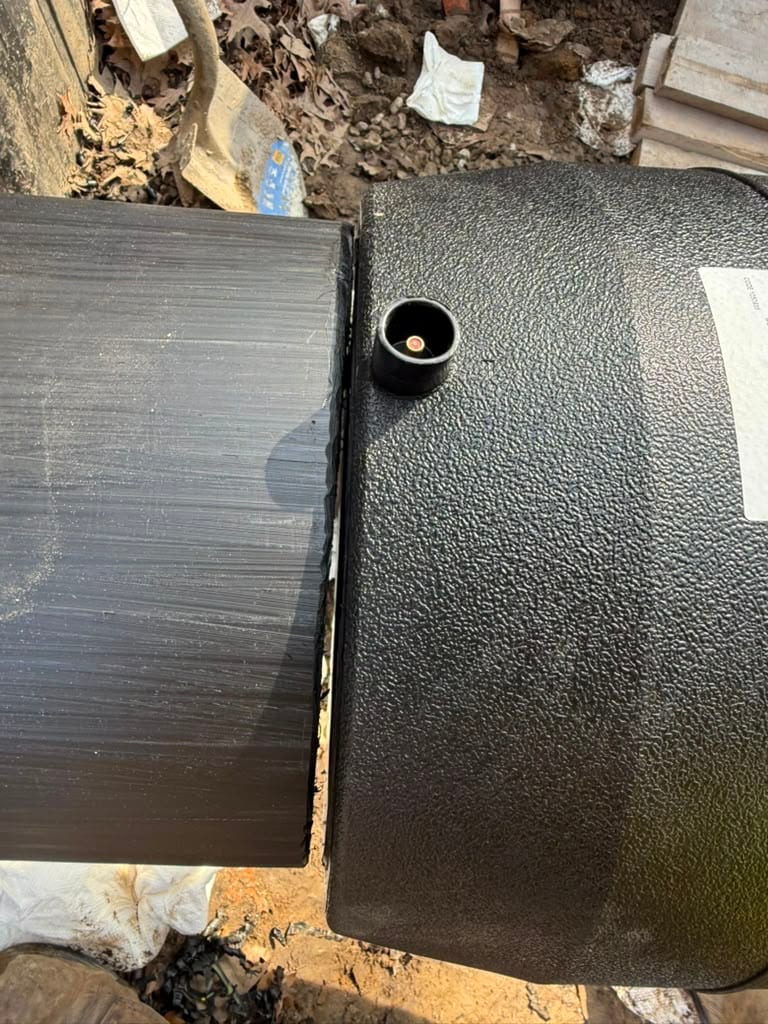
Branch connections fused directly onto an existing HDPE main — pressure-tight service lines and laterals without compromising the pipeline.
Saddle fusion creates branch connections on existing HDPE pipelines by permanently fusing a saddle fitting directly to the pipe. It provides a durable, pressure-tight connection for service lines, laterals and system expansions without compromising the integrity of the main pipeline.
When a system needs a new service, a lateral or an expansion, the alternative to a saddle is cutting the main apart and rebuilding it with a tee — more joints, more downtime, more risk. A fused saddle bonds to the outside of the pipe wall and becomes part of it. The main stays whole, and the branch is as permanent as the pipeline it came off of.
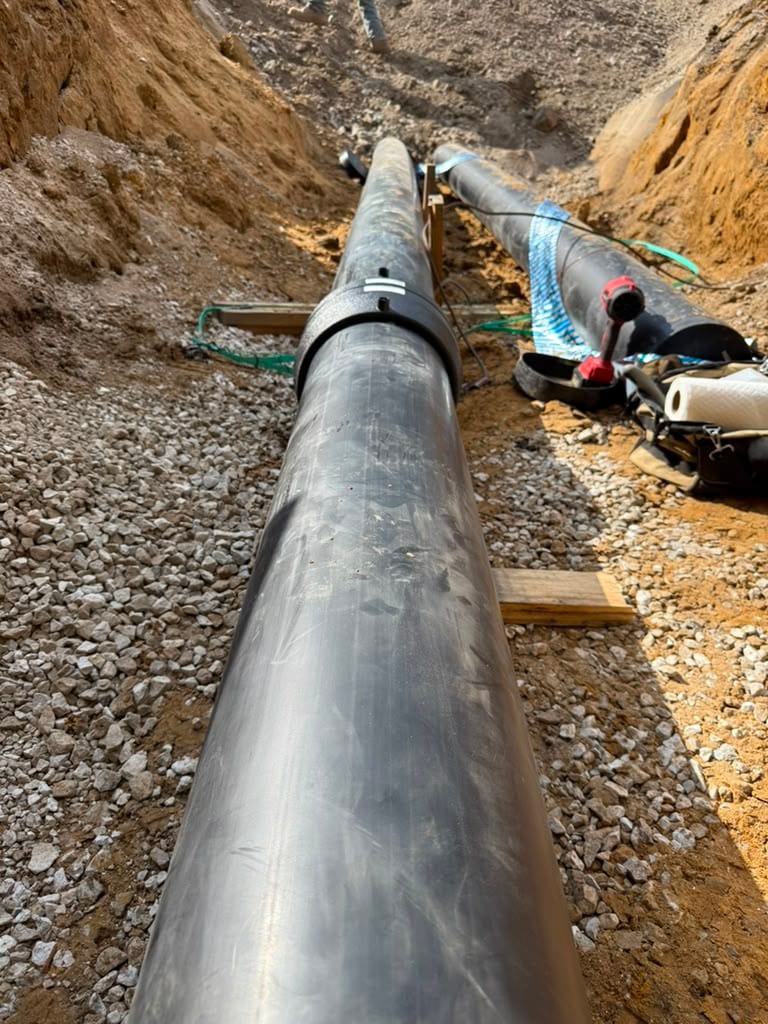
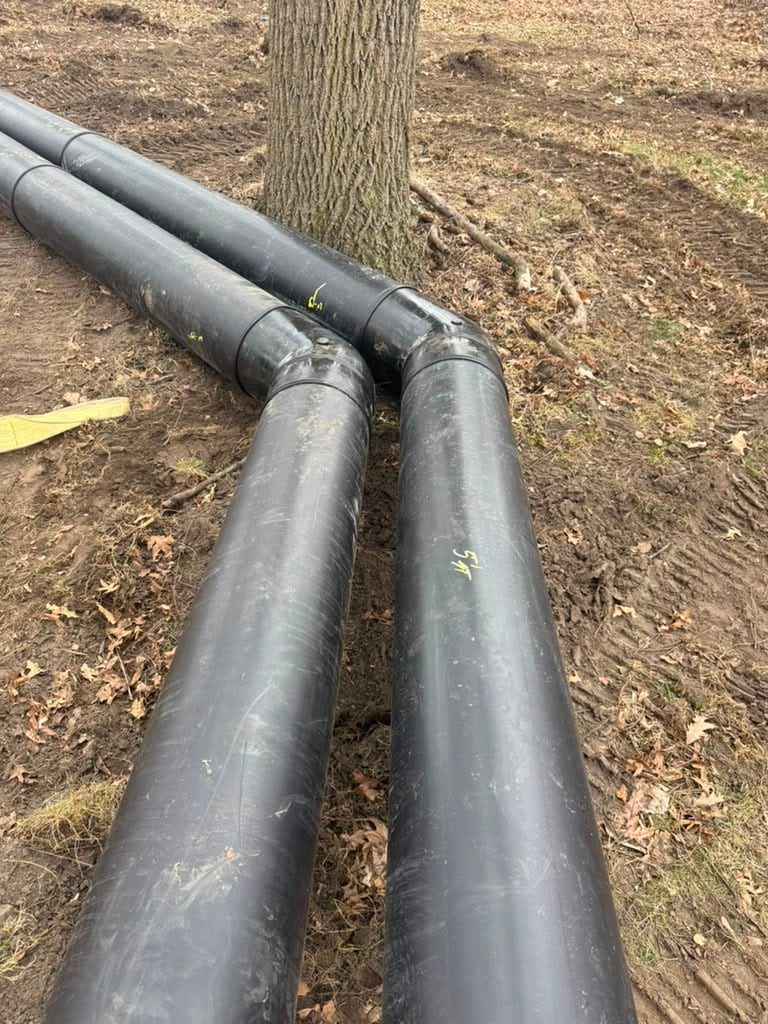
The pressure and alignment during that press matter enormously — a saddle set crooked or with too little force will look fine and perform badly. Ours get fused with the correct tooling and held mechanically until the joint is fully cool.
Saddle fusion is usually the faster, lower-risk option: no cutting the main, fewer joints, less excavation, and far less disturbance to a system already in service. A cut-in tee — joined by butt fusion or electrofusion — makes more sense when the branch is large relative to the main, or when the design calls for a full-bore connection. Send us the main size, the branch size and the service, and we'll tell you straight which one your job wants.
Saddle fusion creates branch connections on existing HDPE pipelines by permanently fusing a saddle fitting directly to the pipe. It provides a durable, pressure-tight connection for service lines, laterals and system expansions without compromising the integrity of the main pipeline.
No. The saddle is fused to the outside surface of the pipe wall and becomes part of the pipe, so the main is not cut apart to make the connection. That is the main advantage of the method — the pipeline keeps its integrity while gaining a permanent branch.
Saddle fusion is used for service lines, laterals and system expansions — anywhere a branch has to come off an existing HDPE main. Common applications include new water and gas services, sewer and force main laterals, adding a leg to an existing system, and outlets on industrial process piping.
A saddle is fused onto the outside of the main without cutting it, which means fewer joints, less excavation and less disruption to a system in service. A cut-in tee requires cutting the main apart and fusing a tee into the run, and is generally used when the branch is large relative to the main or when a full-bore connection is required.
In many cases yes — that is exactly why tapping tee saddles exist. The saddle is fused to the outside of the pipe, and the branch is opened through the fitting afterward. Whether it can be done live depends on the system, the pressure, the product and the owner's procedures, so this is confirmed project by project.
The surface of the main is scraped to remove the oxidized outer layer and cleaned so the saddle fuses to fresh material. The saddle base and the pipe surface are then heated together with matched tooling before the saddle is pressed on at controlled pressure and held through full cool-down.
Main size and material, branch size, and the service.
Saddle or cut-in tee, sized and specified for the job.
Surface prepped, heated and pressed on under controlled force.
Cooled, opened, connected and pressure tested.
Tell us the main size and the service you're adding — we'll price it out.