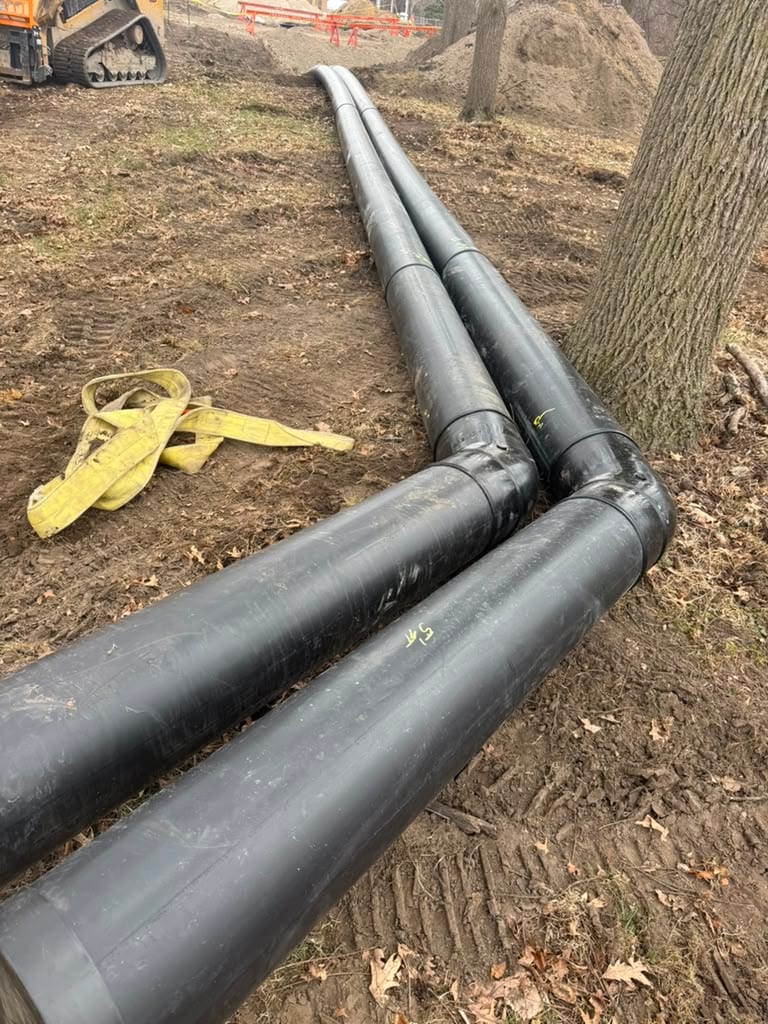
Precision joining of smaller diameter HDPE pipe and fittings — permanent, leak-free connections for pressure piping systems.
Socket fusion is commonly used on smaller diameter HDPE pipe and fittings. The pipe and fitting are heated simultaneously with specialized tooling, then joined together to create a permanent, leak-free connection. This method is frequently used for pressure piping systems requiring precision and reliability.
Where butt fusion joins pipe end to end, socket fusion slides the pipe into a fitting. The outside of the pipe and the inside of the socket are heated at the same time with a matched face tool, then pushed together — the result is a joint with more bonded surface area than the pipe wall itself, in a package that stays compact and clean.
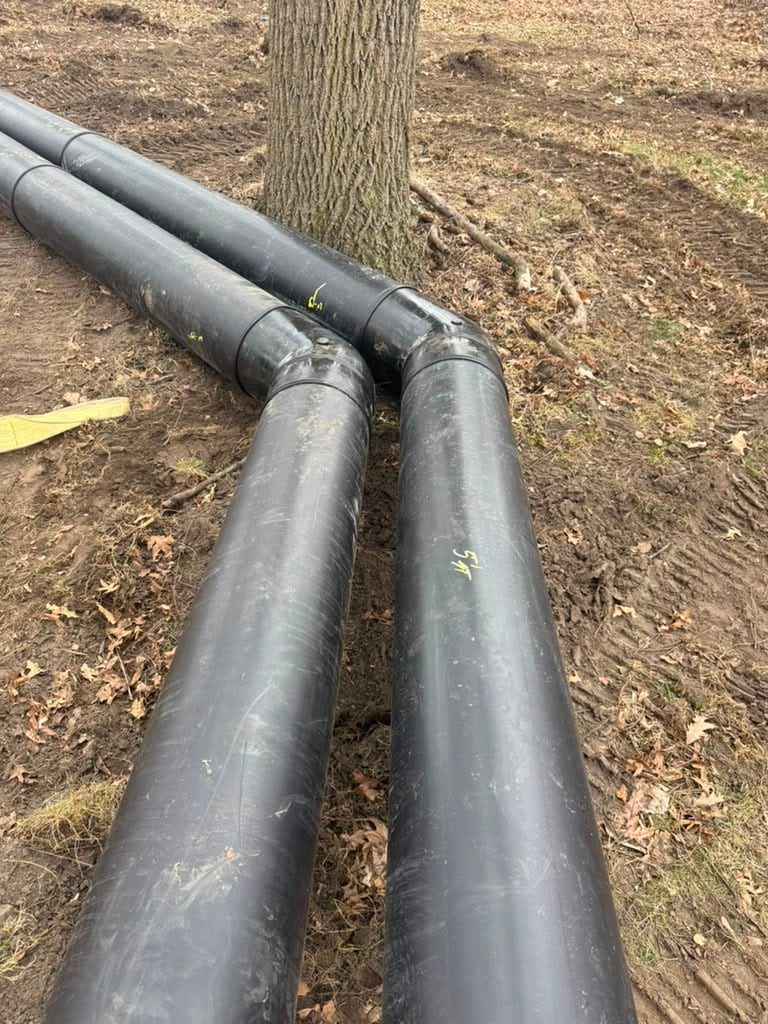
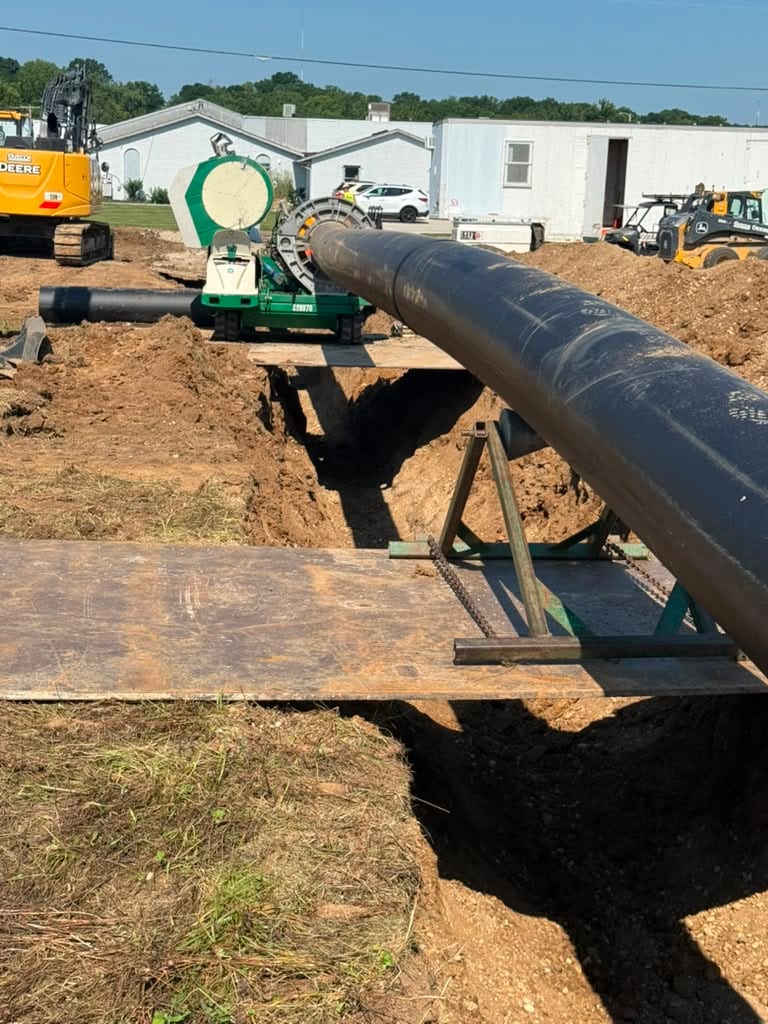
Socket fusion is the practical answer whenever a project needs fittings on smaller pipe: elbows, tees, couplings, reducers, valve connections and service assemblies. Because the joint is compact and doesn't need the standoff room a butt fusion machine requires, it works well in vaults, meter pits, pump houses, mechanical rooms and tight trench sections.
Both produce a permanent, leak-free joint — they just solve different problems. Butt fusion is the efficient choice for long runs of the same size pipe, since it needs no fittings at all. Socket fusion earns its place on smaller diameters and anywhere the run has to change direction, branch, reduce or land on a valve. On most projects we use both, and where a connection has to be made in a confined space or on pipe that can't be pulled into a machine, electrofusion takes over.
Socket fusion is commonly used on smaller diameter HDPE pipe and fittings. The pipe and fitting are heated simultaneously with specialized tooling, then joined together to create a permanent, leak-free connection. This method is frequently used for pressure piping systems requiring precision and reliability.
Butt fusion joins two pipe ends directly to each other to form one continuous pipe, and is most efficient on long runs of the same size. Socket fusion inserts the pipe into a socket fitting, with both surfaces heated at once, and is used on smaller diameter pipe and wherever the system needs fittings such as elbows, tees, couplings and valve connections.
Socket fusion is generally used on smaller diameter HDPE pipe and fittings, while larger diameters are typically butt fused or electrofused. Send us the sizes on your project and we will confirm which method is appropriate for each connection.
A correctly made socket fusion joint is a permanent, leak-free connection with a large bonded surface area between the pipe and the fitting. As with every fusion method, joint quality depends on clean preparation, correct insertion depth, proper heating time and holding the assembly still through complete cool-down.
Socket fusion is frequently used for pressure piping systems requiring precision and reliability, including service lines, fitting assemblies, valve connections, and work inside vaults, meter pits, pump houses and other tight spaces where a large fusion machine will not fit.
Yes. Socket fusion is widely used on pressure piping systems. The joint is permanent and leak-free when the correct tooling, heating time and insertion depth are used, which is why the method is specified where precision and reliability matter.
Pipe size, fittings, layout and where it lands.
We verify socket fusion is right for each connection.
Heated with matched tooling, inserted to depth, held to cool.
Assembly checked, installed, and ready for pressure test.
Send us the layout and sizes — we'll tell you the best method and price it.